
Game Changers and The Comeback of MAAM was originally published in “The Museums Issue” May/June 2022 issue of Art New England. For this blog and website, this version is slightly different, with new edits
By C. Shardae Jobson
At the beginning of Paloma Dawkins’ desktop game Gardenarium (2015), a character with wings, and a pair of wings that faintly resemble hands, stands in the middle of the screen and a pop-up appears asking, “Are you human?”
You then have the option to click “Yes” or “No.”
What should feel like a no-brainer suddenly translates as a bit of a riddle. And a highly emotional one.
This is heightened by the fact that you’re being asked right before entering one of Dawkins’ alternative universes–in the form of a video game. At this point, anything feels possible.
-Are you human enough to find your way in or out of this game?
-Are you simply human enough period?
“Are we human, or are we dancer?” – “Human” (2008) by The Killers
Such a trippy visit to just one of her worlds is right at home in an exhibition like Game Changers, currently on view at the MassArt Art Museum (MAAM), where you can play Gardenarium. It joins other games and virtual realities using video game technology and artwork inspired by video games.
Like for the latter, Dan Hernandez’s “Festival of the Alter Beasts,” (2015) is a painting with the unforeseen merging of (referencing) Leonardo da Vinci’s “Annunciation” (1472) and the arcade game Street Fighter II (1991).
As expressed by MAAM, Game Changers and its nine artists spotlight the “Confluence of contemporary art, video games, and digital frontiers.”

Game Changers is one of MAAM’s three inaugural shows, as MAAM, Boston’s only free contemporary art museum, initially opened in February 2020 after months of renovation.
“When the pandemic happened, we had to close the museum. We were open for 13 days,” Lisa Tung, MAAM’s Executive Director confirmed. “[When we opened], it was awesome. We had lines around the block. It was a really celebratory feeling. The weather was in the ‘50s. It was warm!”
“Artists were here and worked the line and talked to people. We had performances. An aerialist. Journal-making. City Councilor–she wasn’t the Mayor [in interim] yet–Kim Janey spoke. It was a friendly, fun vibe and to my knowledge, everyone was able to get in and see.”
After being closed for nearly a year and a half, and like most art institutions, pivoting to providing resources, shows and discussions online (all of which are still in effect and QR codes can be scanned throughout MAAM, in-person), the museum re-opened in October 2021.
Alongside Game Changers, Joana Vasconcelos’s first U.S. solo exhibition Valkyrie Mumbet, a staggering, 1-ton, multi-hued installation that’s suspended from the ceiling, and Yesterday is Here by Ghost of a Dream, an “Activation,” as described as Tung, and to visitors, a collage that utilizes “30 years worth” of past MassArt exhibition catalogs, were all finally accessible again for extended viewing.
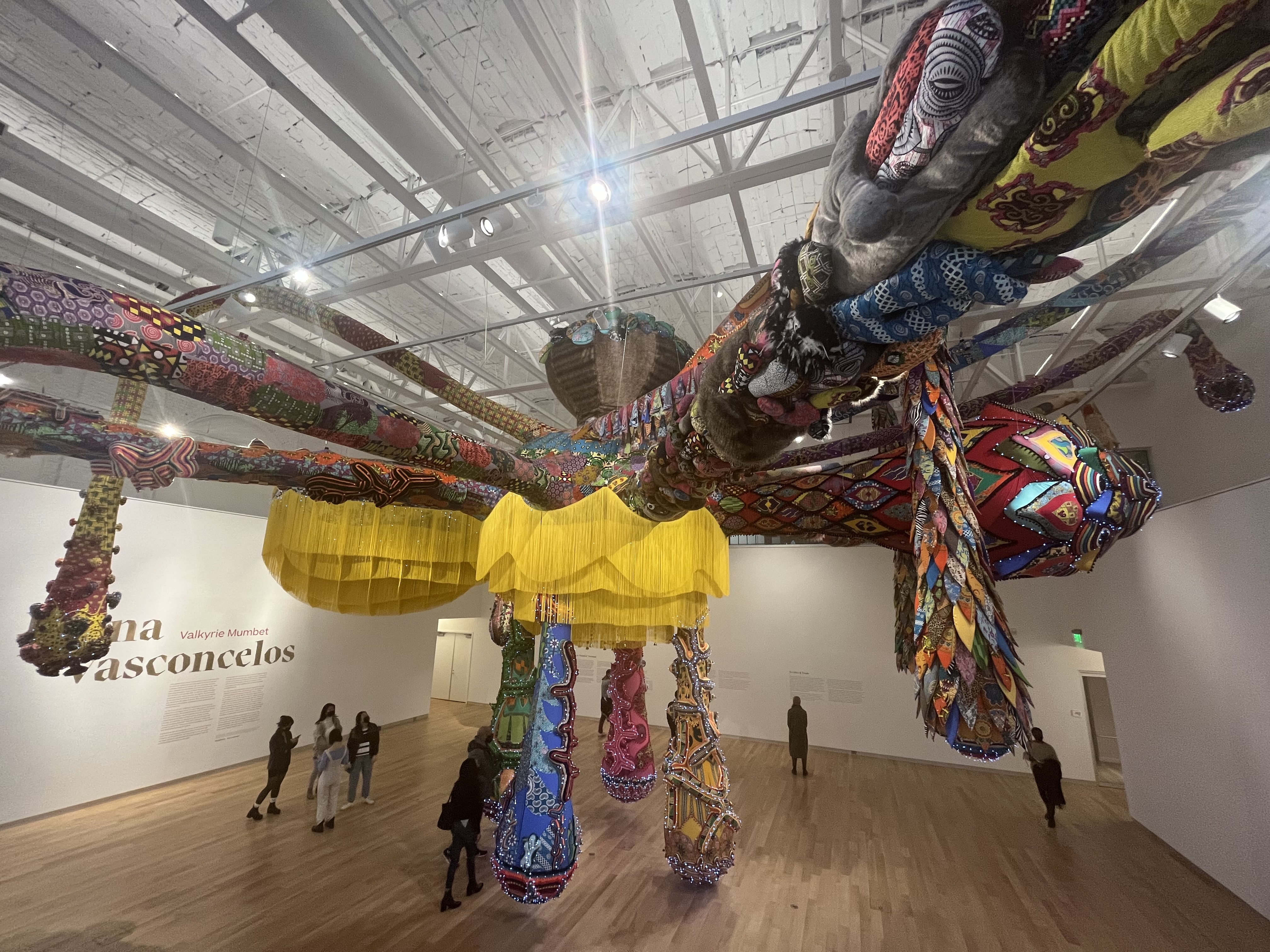
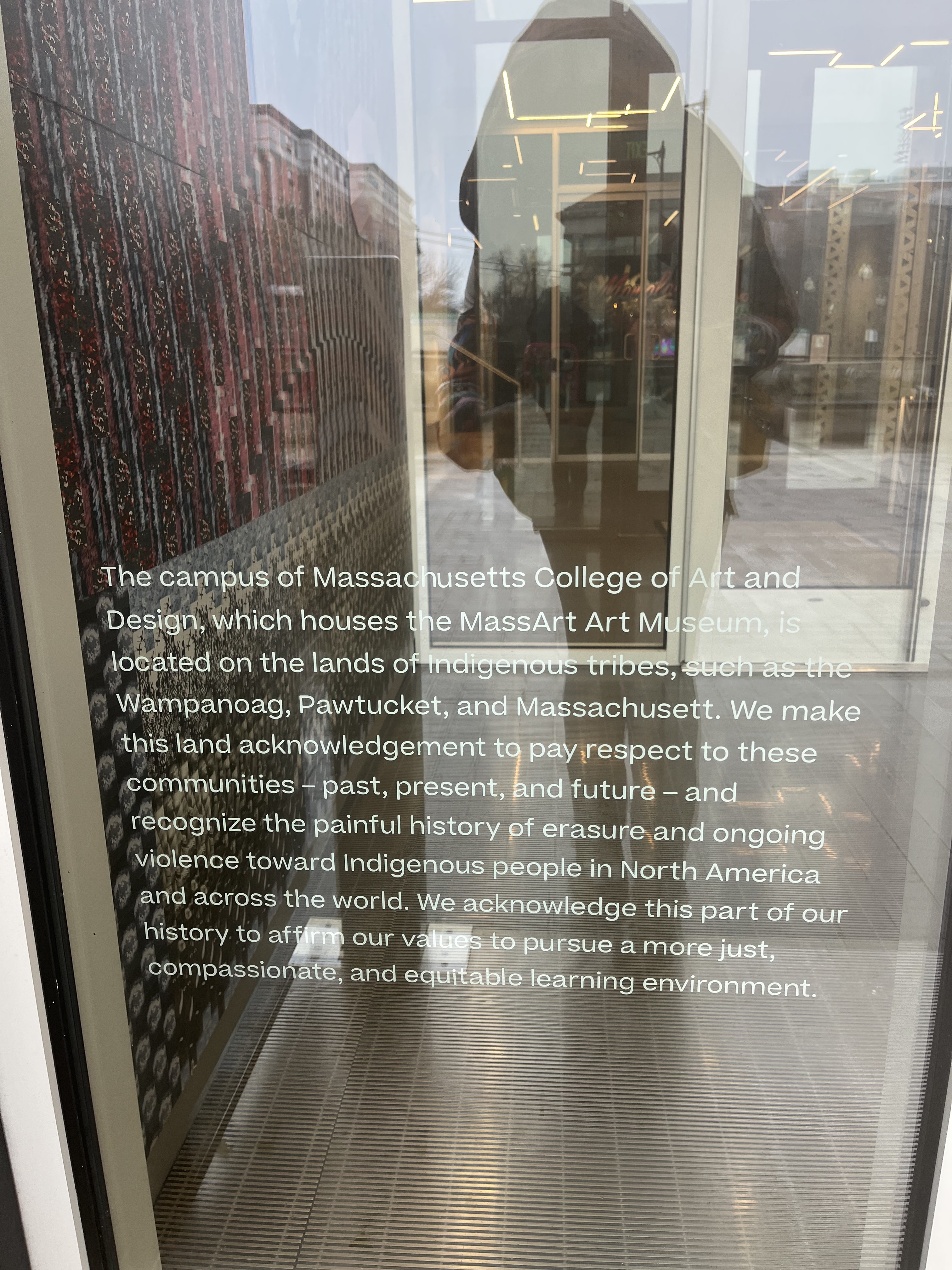
“One of the things I felt really strongly about with the [renovation] was that, when you come into MAAM, you should really feel like it’s something different,” Tung says. One of the physical touches added was an official front door entrance. “It’s contemporary. Maybe [something] will shake you out of your comfort zone.”
Comfort is what you initially feel when knowing on a surface level that the Game Changers exhibition concerns the video game medium. Even if not a gamer, one is familiar with what a video game console looks like and how it’s played!
Yet everything on display and available for you to give a go at, like digitally navigating Walden Pond in Tracy Fullerton’s Walden, a game (2017). Or, the extremely provocative contributions of Brent Watanabe and Cao Fei–that only require you to watch their video art–all in some way challenge visitors to see, touch and explore the idea of a world beyond what we’ve been conditioned to accept.
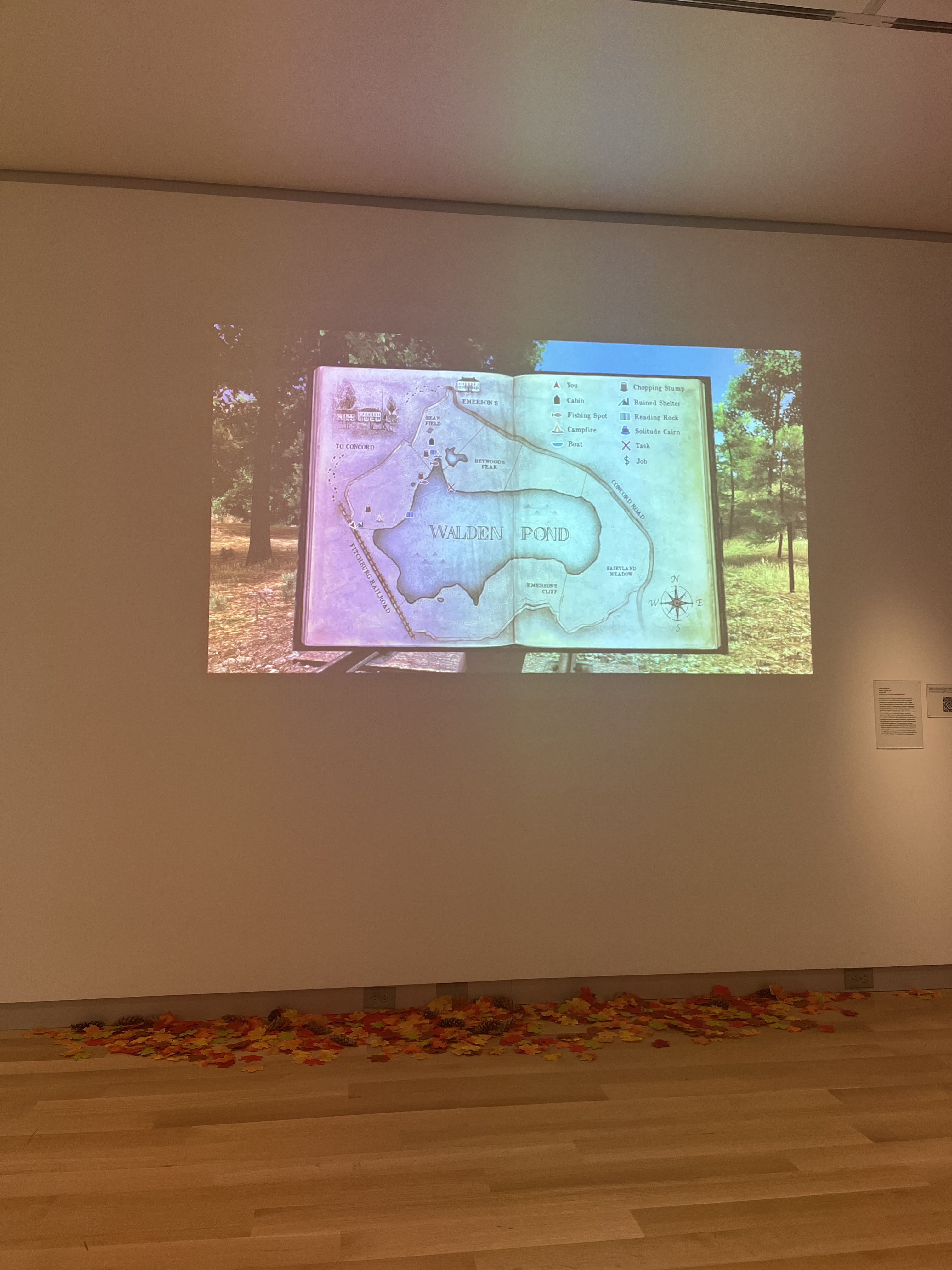
In addition to, what lies underneath the stereotypes we’ve been fed.
There are some sensitive messages expressed through the underrated art forms of video art, video games and experimental subcultures. It’s an exhibition that asks you to re-think what a video game or figure can do.
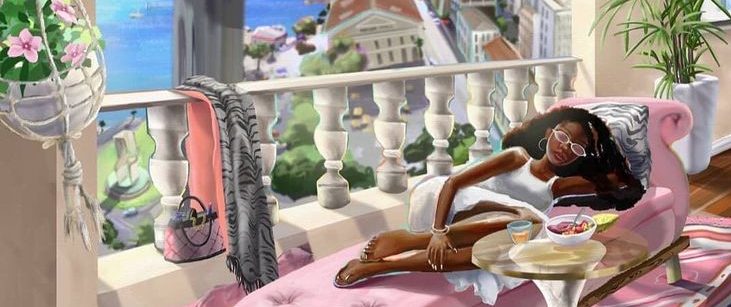
Take Momo Pixel and her anime and manga-inspired work that’s incontestably the most colorful and Instagrammable of Game Changers. Her Momoland features an in-person cotton candy pink tree sculpture. A VR game to collect as many hearts as possible. And another called “Hair Nah,” a comedic yet confrontational response to the unsolicited touching of a Black woman’s hair. There’s also a wall of 2D artwork featuring melanted anime characters, such as Sailor Moon reimagined as a Black female sailor scout.

Then there’s Skawennati, a multimedia artist whose muses are the traditional Indigenous community, and in her machinimas (or “machinemas.” Movies made with real-time computer graphics), traditional Indigenous garb are in concert with the aesthetics of cyberpunk and steampunk.
Game Changers implicitly retorts the notion that video games are not art or have almost always been without substance. As an offshoot of animation and cinema, video games have been infamously derided for decades. And video or electronic art remains of niche appreciation.
Thankfully, non-profit organizations like Boston Cyberarts support electronic art and MAAM is too. MAAM is on a general and yet reinvigorated mission to galvanize the art world by doing their part in illuminating more artwork by artists from marginalized communities and artwork that could be perceived as activist, socio-politically driven or merely a celebration of culture.
“First and foremost, we’re a teaching museum. We’re teaching the public about contemporary art, teaching our constituents inside, and supporting our faculty and their curriculum,” Tung says. “The last piece–which is very important–is exposing students and young alumni to careers in a museum and hiring them and paying them to work for us and training them so that they can work at another museum and hopefully that will change how museums [operate internally].”
She adds, “As we know, 75% of museums are white. White people working there. White curators and directors. And overwhelmingly, white male stories are told. That can’t change if you don’t have other people who want to tell other stories.”
Game Changers has also been a chance to bring attention to stories that could qualify for fascinating Trivial Pursuit. But punctuated with greater context and meaning once under the lens of, say, MassArt associate professor Juan Obando.
His “Pro Revolution Soccer,” is modded off of the game Pro Evolution Soccer and envisions a match between the Zapatista Army of National Liberation versus Inter Milan (that was proposed in real life, but never actually took place). Its accompanying wall of banners are repurposed Just Do It ads by Nike, with still shots of soccer players with quotes such as:
“Our position is what names us.”
“Everything for everyone. Nothing for us.”

Though Game Changers is only three rooms big, it’s an impactful showcase of how far the video game and video art mediums have come in storytelling, influence and visuals.
While the pandemic certainly brought MAAM to a halt, Game Changers was actually ahead of the pandemic trend or afterthought of loving the arts (beyond music and film) not only during leisure but in recognizing it as a conduit to one’s own creativity, and sustaining us when we need it most. As an unpretentious rallying cry, Game Changers asks us to finally regard the video game format and all its possibilities.

 Lavish Rebellion [DOT COM]
Leave a comment